Recognising the type of acne
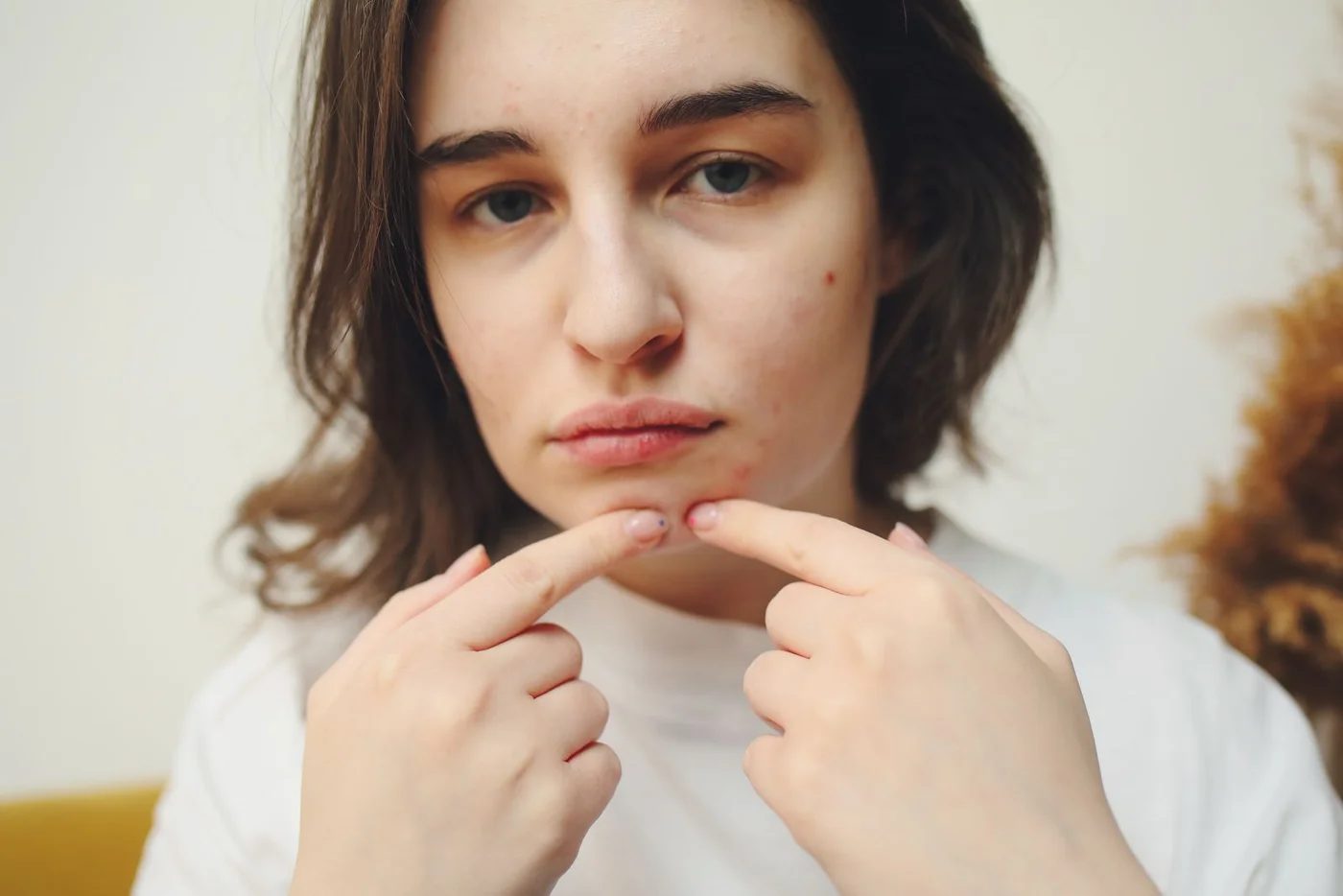
Blackheads and microcysts (comedonal acne), red spots and pustules (inflammatory acne), deep painful nodules (nodular acne): these forms do not call for the same treatments. The consultation starts by telling them apart, then looks for what keeps acne going in your case (hormones, occlusive cosmetics, medication, rubbing, smoking). This examination avoids piling up products that have no reason to work.
Underlying treatment first
The foundation remains medical: topical retinoids to unblock pores, other topical treatments and, when acne is widespread, deep or scarring, hormonal or oral treatments, including isotretinoin. The latter requires monitoring, tests and contraception in women, because it must not be taken during pregnancy. Without underlying treatment, supporting treatments have little lasting effect.
Adult acne, especially in women
In adults, acne often affects the lower face, chin and jawline, with flare-ups before periods. Irregular periods, excess hair or hair loss point to a hormonal cause to look for, sometimes with the help of a gynaecologist. Treatment differs from that of a teenager: it takes into account the greater risk of irritation at this age and any plan for pregnancy.
Acne on olive skin: protecting the skin from marks
On olive or dark skin, inflammation very easily leaves brown marks that take months to fade, sometimes longer than the spots themselves. Hence two rules: treat inflammation quickly and without aggression, and apply daily sun protection, because the Marrakech sun fixes these marks. Not picking at spots matters more than you might think.
Afterwards: scars and marks
Once acne is under control, the after-effects can be treated: pigment marks, sunken or raised scars, enlarged pores. The options (Dermapen, Fotona fractional lasers, PRP) are described on the acne scars page; they are not done on acne that is still active.
Clinic treatments that support the medication
A medical facial cleanse or HydraFacial Syndeo can complement the underlying treatment by clearing out the skin, and the blue light of LED therapy helps purify acne-prone skin. These are supporting treatments: they do not replace medical treatment.