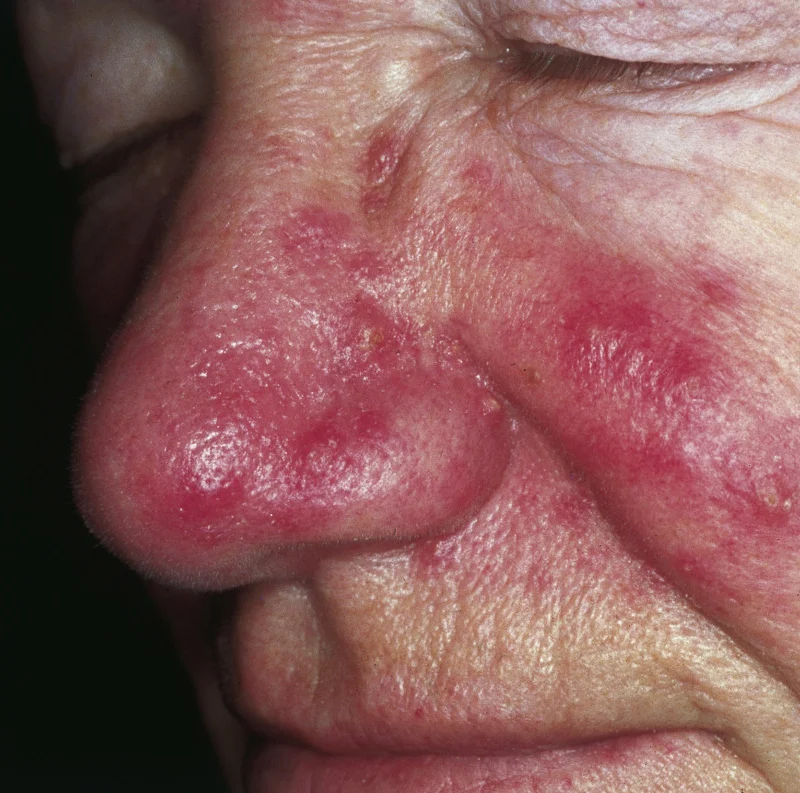
The forms of rosacea
The erythematotelangiectatic form combines redness and visible vessels. The papulopustular form adds inflammatory spots. The phymatous form, rarer and mostly male, thickens the skin of the nose. The ocular form irritates the eyes, which become red and dry. The same person can have several forms, and each has its own treatments.
Recognising rosacea and telling it apart from other conditions
Facial redness can also be simple broken capillaries, seborrhoeic dermatitis, eczema, lupus or a reaction to a cosmetic. The examination looks for clues: central redness, flushing triggered by heat or hot drinks, absence of blackheads. A diagnosis avoids months of badly chosen creams, sometimes topical corticosteroids that make the condition worse.
What triggers flare-ups
Sun, heat, sudden temperature changes, very hot drinks, alcohol, spicy food, stress and certain cosmetics. Not everyone is sensitive to the same factors: keeping a flare-up diary for a few weeks helps identify yours. You do not remove everything on principle, only what plays a part in your case.
Underlying treatment
Depending on the form: topical anti-inflammatory and anti-parasitic creams and, when spots are numerous, an oral treatment. Gentle skin care and daily sun protection, sometimes mineral, are added, because many everyday products irritate rosacea-prone skin. The treatment acts within a few weeks, but it needs to be continued to avoid relapses.
The vascular laser
When vessels and redness persist despite medical treatment, the vascular laser (Nd:YAG of the Fotona platform) closes the small visible vessels. One to three sessions are often enough. It treats the vessels and the background redness, not the disease: the spots and sensitivity of the skin remain a matter for medical treatment. The vascular laser page describes how it goes.
The eyes too
Red, dry, stinging or watering eyes in a person with rosacea call for an ophthalmology opinion: eye involvement is common and can go unnoticed. The dermatologist refers you if needed.