How does laser remove a tattoo?
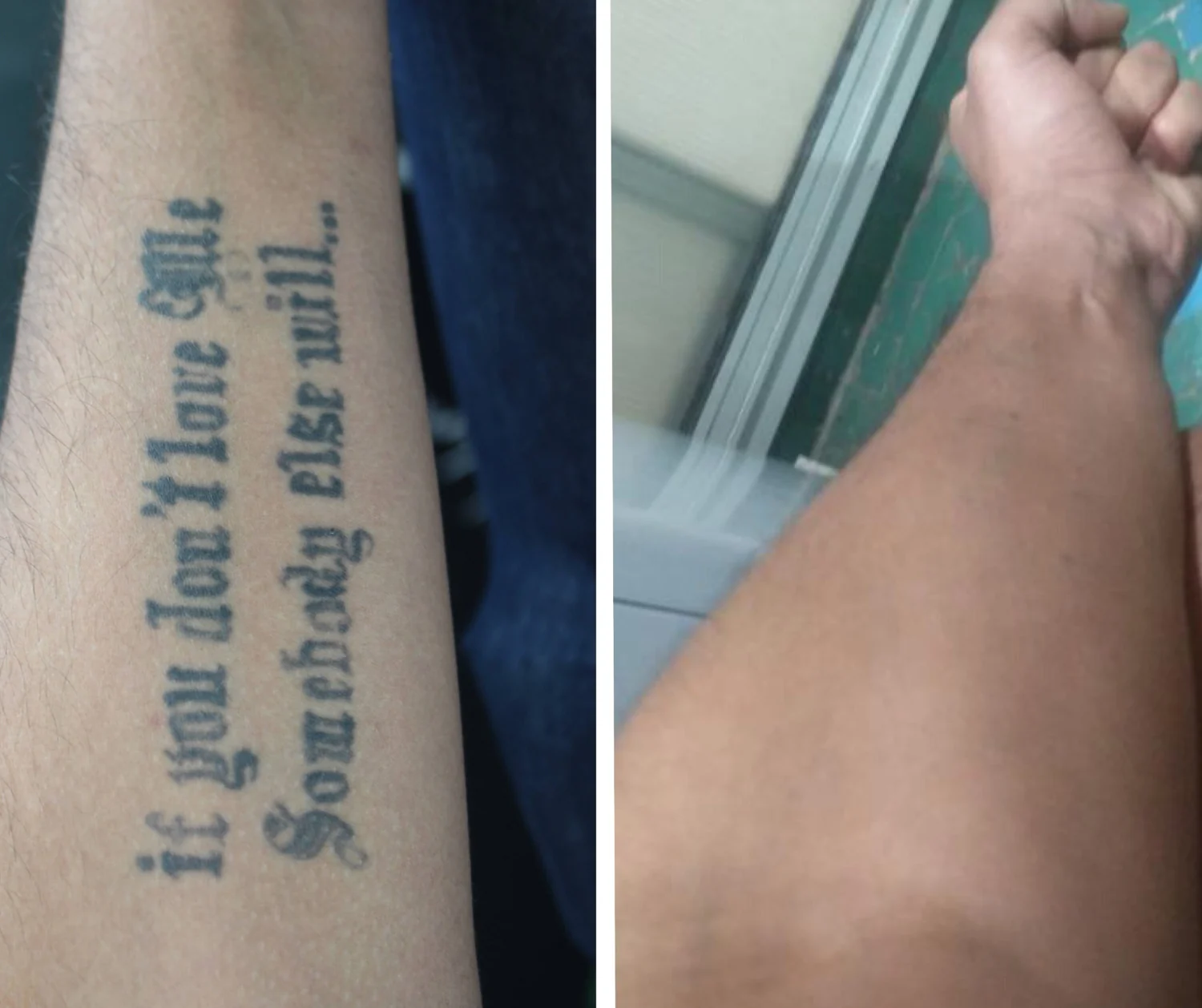
The laser emits extremely short pulses (nanoseconds or picoseconds) that the ink absorbs: it bursts into very fine fragments, which immune cells gradually clear. The skin is not removed. Each colour absorbs certain wavelengths, hence the value of having several wavelengths: the clinic's StarWalker MaQX offers two: 1064 nm for black, 585 nm for red and orange. A fractional handpiece completes the treatment and helps with tattoo removal.
Which tattoos can be treated?
Black and dark blue tattoos respond best. A wide range of colours (red, brown, green, blue) can also be treated, with more sessions. Light shades (yellow, turquoise, light green, white) are the hardest. Amateur tattoos, more superficial, generally go faster than professional ones, dense and deep. Permanent makeup (eyebrows, lip contour, eyeliner) can also be treated, with precautions specific to each area.
How many sessions, at what rhythm?
Several sessions are needed, about six to eight weeks apart, the time the body takes to clear the fragmented ink and the skin to heal. The number depends on size, colours, age, depth of ink and area: a small black tattoo needs fewer sessions than a large coloured one. It is estimated at the examination and adjusted over the sessions; the dermatologist tells you honestly, at each stage, what the skin allows you to hope for.
What does a session feel like?
The sensation is described as small rubber-band snaps or hot splatters, more or less sharp depending on the area. Skin cooling and an anaesthetic cream can be used. The session is short: a few minutes to a quarter of an hour depending on the size of the tattoo.
Aftercare
Just afterwards, the skin briefly whitens, then becomes red and swollen; a blister or scab sometimes forms in the following days. A dressing and a soothing treatment are advised. Do not scratch or pierce, and avoid sun, sea or pool bathing and friction until fully healed, then protect the area from the sun throughout the protocol.
Olive and pigmented skin: particular vigilance
The laser can lighten or darken the skin around the tattoo, especially on olive or dark skin, because melanin also absorbs light. Dr Sara Zahid is trained in managing dark skin types: the laser, settings and rhythm of sessions are adapted, the skin is protected from the sun and the interval between sessions is lengthened if needed. A test on a small area may be offered.
Risks and precautions
The risks are: blisters, scabs, temporary or lasting light or dark marks and, more rarely, scarring or infection if instructions are not followed. Treatment is postponed in case of tanned, damaged or infected skin, pregnancy, or a tendency to keloid scars; report photosensitising treatments. Some cosmetic tattoos (flesh-coloured, pink, white) can darken under laser: a prior test is useful. Tattoos around the eye call for particular caution.
Black henna tattoo: when to consult
Black henna, often offered to visitors in Marrakech, contains a dye (paraphenylenediamine) which sometimes causes an intense allergic reaction, with redness, blisters and scarring. It is not an ink tattoo and laser is not the first treatment: first consult to calm the reaction, before considering scar treatment. An allergy to this dye must be reported afterwards.
Why tattoo removal in a dermatology practice?
Tattoo removal affects the skin, which can scar or change colour: it needs a medical laser, suitable settings and follow-up. The dermatologist first examines the area, spots a pigmented lesion under the tattoo (mole) or an ink allergy, treats after-effects and, if needed, offers an alternative: fading the tattoo to cover it with a new design, for example.
Where to have laser tattoo removal in Marrakech?
At the Skin & Aesthetic Clinic, in Guéliz, with Dr Sara Zahid, dermatologist, by appointment, in French, English or Arabic. A consultation precedes the first session; a detailed quote is given before any procedure, with no single displayed price.