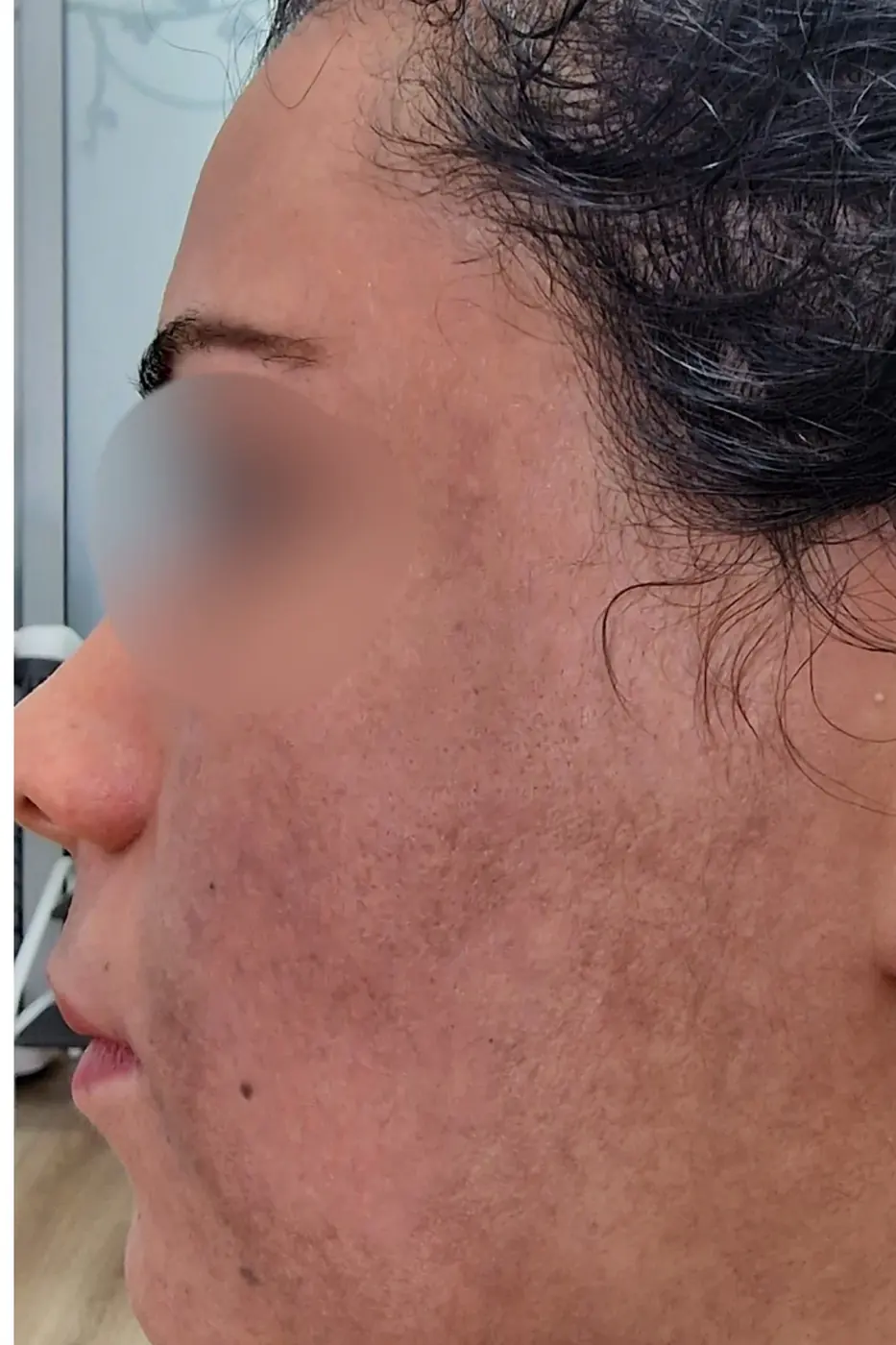
Why melasma appears
Hormones (pregnancy, the pill, hormonal treatments), the sun and a personal predisposition combine. Visible light, not only UV, also keeps pigmentation going. Some skins, often olive ones, are more exposed. Melasma is sometimes linked to irritating cosmetics or to repeated heat on the face.
Strict sun protection, all year round
This is the foundation. A high-SPF sunscreen applied in the morning and renewed, a hat, sunglasses, and attention to the intense light of the afternoon. A tinted screen also protects against visible light. Without this, no treatment holds: one day in the sun is enough to undo weeks of care.
Medical treatments
Depigmenting creams prescribed individually, with close follow-up to adjust doses and avoid irritation, are the core of treatment. In some cases, an oral treatment (tranexamic acid) can be discussed, after checking for contraindications. Melasma responds slowly: several weeks before any lightening begins.
Laser, as a complement only
A badly chosen laser can make melasma worse, hence great caution. When it is judged useful, it comes once the condition is stable, with low-energy Q-Switch or picosecond lasers, in spaced sessions, and never replaces sun protection or underlying treatment. Powerful ablative lasers are to be avoided on melasma.
Melasma or something else?
A brown facial spot can also be a sun lentigo, post-inflammatory pigmentation, a Hori nevus or, more rarely, a lesion to monitor. Treatment is not the same. The dermatologist examines the spot, with dermoscopy if needed, before prescribing anything.
Melasma and pregnancy
The pregnancy mask often appears during the first months and sometimes fades after delivery. During pregnancy, care is limited to sun protection; depigmenting treatments and lasers wait until the end of pregnancy and breastfeeding. The dermatology and pregnancy page sets out the timeline.